
Handheld ER Diagnostics
Utilizing handheld ultrasound to simplify patient diagnostics
During and after the Covid-19 pandemic, we saw how many hospitals and care centers became inundated and overwhelmed with patients.
We saw an opportunity to help reduce the workload and speed-up the patient diagnosis and treatment. Using AI and existing research, we set up a plan for a comprehensive handheld tool that would provide four key measurements for infectious disease triage in ER environments.
Team and role
Lead UX designer and researcher
2022-2023
Philips innovation team
Reduced time to care from 5-6 hours to as little as 30 minutes by designing key innovative ultrasound AI tools.
Outcomes


Context
What is the problem?
Emergency care physicians are required to take a series of scans when a patient presents with trauma or possible infectious disease. This screening can take upwards of six hours, taking up critical time and beds in the ER.
How can we help?
We can utilize AI to consolidate the needed scanning into a tool that presents symptoms quickly, reducing the need to do additional scanning.
Goals
Design a system that assists the users in the diagnosis of critical lung conditions.
Consolidate diagnostic tools while minimizing modification of the existing tools.
Reduce patient time to diagnosis, treatment, and care.
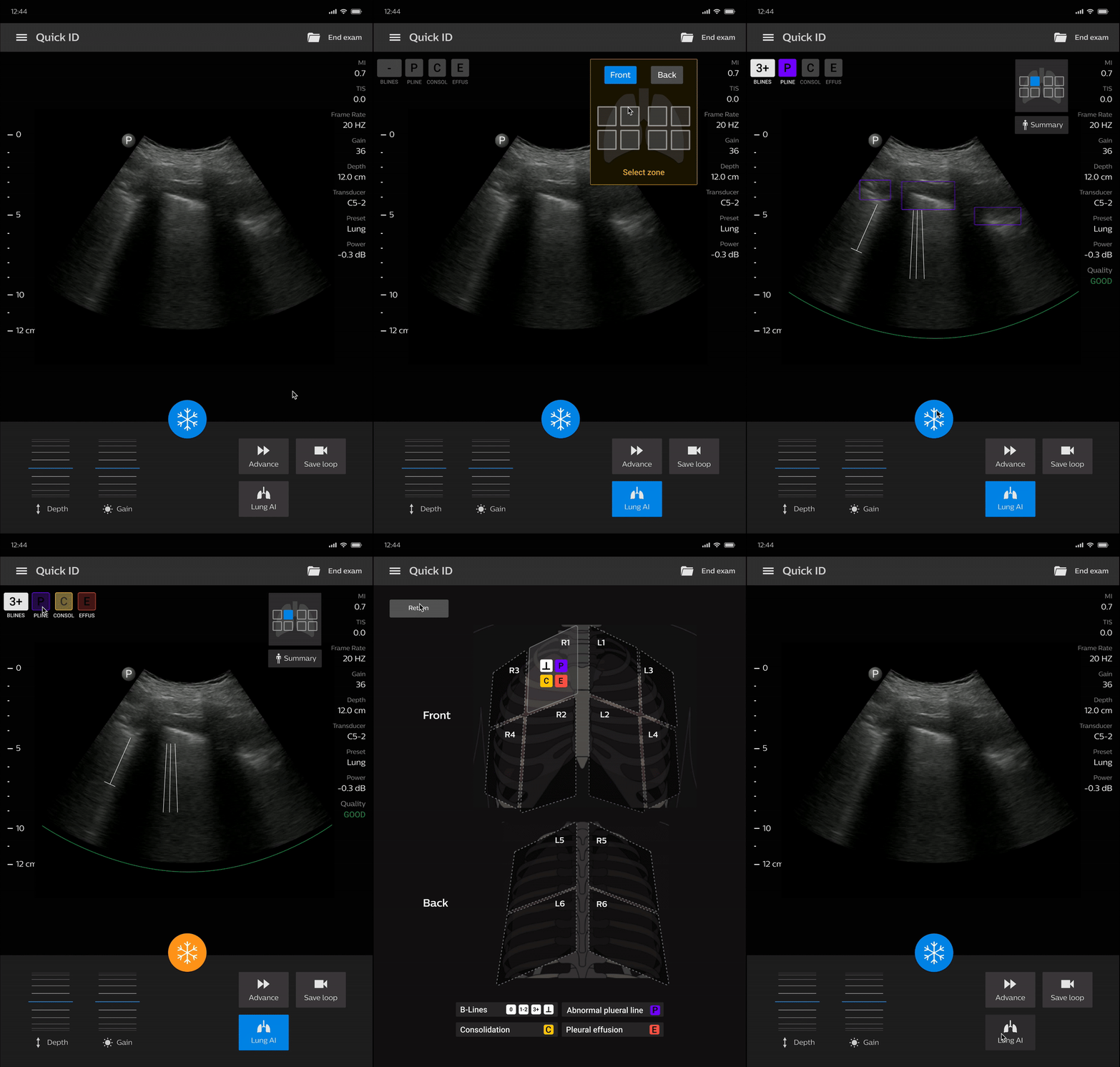
Lung panel
Final phase was a combination of these key measurements into one visualization, providing the physician with a high level overview of symptoms as they scanned
Design system alignment
The overall design works with the existing design components in order to make transfer to development smooth and efficient
Summary
The user is able to view an overall summary of the scanning done so far, and quickly assess if any more scans need to be taken
Active scanning
Throughout initial scanning, conditions can be seen as they are found

User research
In order to better understand the current state, we spoke with clinicians utlizing workshops to better understand how we could best assist
Workshop
with engineers, clinicians, designers, and managers
Iterate
by building wireframes, walkthroughs, journeys and personas
Test
with low and high fidelity prototypes in individual and small group interviews


Focused protocol
We relied on a commonly used protocol for detecting infectious lung disease:
the ABC protocol
A
- lines
B
- lines
C
onsolidation
Are a-lines present?
Are B-Lines present?
No
Yes
Is consolidation present?
Infectious disease highly probable
Is there normal lung-sliding?
Are they merged?
Key visualizations
In order to complete the ABC protocol, there are five key symptoms that need to be confirmed utilizing ultrasound

A-lines and b-lines
Initital understanding of the current state of fluid in the lungs

Lung sliding and scan quality
Check for healthy lung sliding, and qualify the quality of the scan itself

Consolidation and effusion
Check for healthy lung sliding, and qualify the quality of the scan itself